Crime and Punishment
by Fyodor Dostoevsky
- fiction
- Shelves: classics, russian literature, psychological, crime, drama
- 656 pages
- ISBN: 9780140449136 (Goodreads)
- Format: kindle
- Buy on Amazon
Crime and Punishment is the best depiction of what it’s like living inside someone’s head. The novel follows a down-and-out former university student Rodion Raskolnikov as he deals with an unfortunate situation, makes some regrettable choices to pull himself up, and how he deals with the aftermath of the hole he creates.
Very little “happens” in the book. Past the first several chapters and the commitment of the titular “crime,” for the remaining hundreds of pages we get to live through Raskolnikov’s mental and emotional anguish as he wrestles with, both to himself and to others, what he’s done. The incredible levels of disbelief and guilt, borderline insanity, psychosomatic illness, intense fever. The tension between hiding what he’s done and giving himself up, to his friends, family, and the authorities.
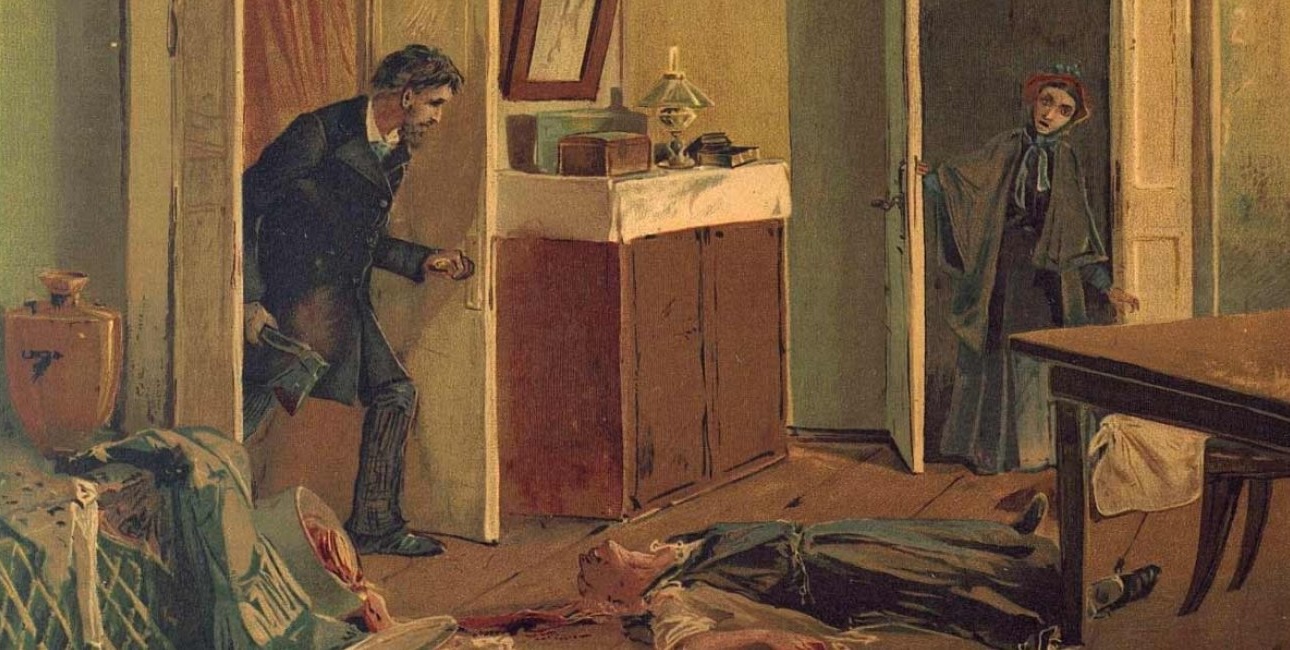
Raskolnikov is a youth consumed with ideas. He’s an idealistic believer in the “Great Man” theory: that the world is moved by extraordinary individuals. And that we morally permit the extraordinary to morally transgress in pursuit of higher ends. Dangerously, though, he also believes that he may be one of these Great Men, and rationalizes his way to his actions from a position of desperation, poverty, and resentment. He wavers between an overconfident arrogance about his deserved position in the world, and a self-loathing rooted in his subconscious understanding that he’s just a man. From one scene to the next he can be tender or compassionate, or brutally abstract. He generously gives all of his money to the consumptive widow of a man he briefly meets early in the story. Conversely, through his Great Man ideas he fancies himself a Napoleon, who can violate moral fabric in the micro to serve some greater good in the macro. He justifies the pawnbroker’s murder to himself as ridding the world of “a louse, sucking the life out of the poor.”
Ultimately something deep within him doesn’t accept his own excuses. Try as he might to talk himself into his abstractions, his inner conflict between his philosophical rationalization and the deep moral wrongness he knows he’s committed emerges as an unsustainable chest-caving guilt.
In an age of the rational, where we look everywhere for scientific, legible explanations for everything (and even worse, justifications), Raskolnikov’s twisting, wrenching internal pain reminds us that even if we can divine a justification for our actions, they still might slam into an invisible moral foundation. Hopefully we all maintain that rigid foundation that generates guilt and shame in the presence of rationalizing our wrongs.
Even though it’s a 150 year old book, I won’t spoil the ending. Suffice it to say that it’s a satisfying end to a slow, rich burn.