Notes Towards the Definition of Culture
by T.S. Eliot
- nonfiction
- Shelves: essays, culture, politics, philosophy
- 128 pages
- ISBN: 9780571063130 (Goodreads)
- Format: paperback
- Buy on Amazon
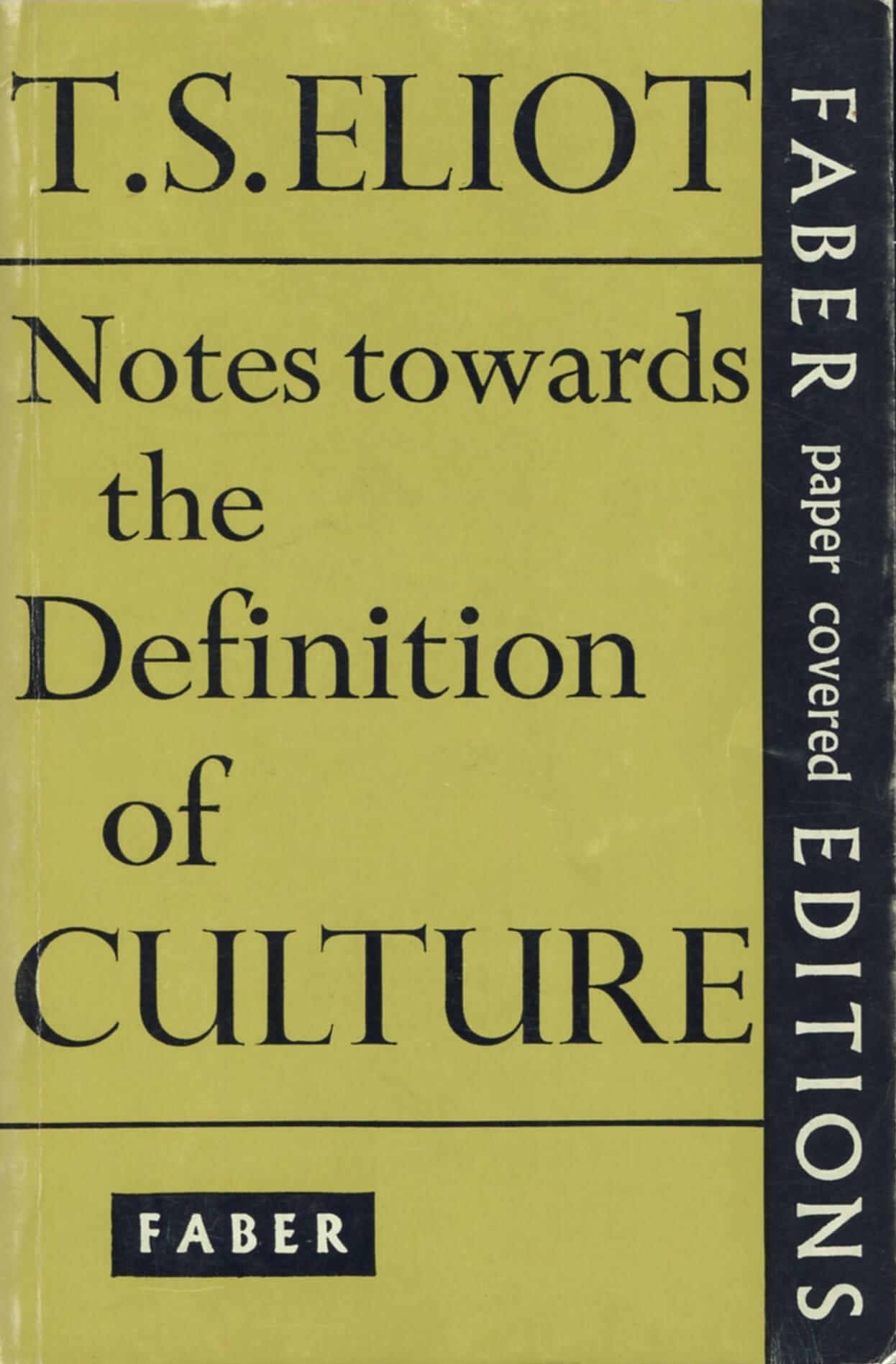
I’m fascinated by culture. Not the superficial “food and art” type, but by its deeper definition: how societal roots grow through a million small actions by groups and individuals over a long period of time, and how those roots support varied, interesting outputs in the societies above them. Strong foundations developed through bottom-up cultural forces are stronger and more resilient than any other top-down plan.
Eliot’s definition of culture is one that sits at a deep level in the pace layers stack. This extended essay is Eliot’s attempt to come up with a concrete way of defining culture that has more utility than the way it’s bandied about to call certain people more refined than others (“look how cultured he is”), or to describe the patterns of small groups or neighborhoods. He aims to go wider and figure out what culture means for whole societies.
He argues that culture is not a detachable sector of society but an organic whole. It’s the accumulated patterns of belief, custom, work, art, and everyday life that grow over generations. Culture cannot be rationally designed or imposed without distortion; it depends on historical continuity and tacit inheritance, not deliberate planning. Eliot rejects the modern tendency to treat culture as something that can be designed through education policy, state programs, or mass access alone, insisting instead that culture emerges only where ways of life are stable enough to be handed down and slowly refined.
Culture exists only where people feel bound to what came before and responsible for what comes after. He positions the family the main vessel of cultural continuity, and calls culture “a conversation between the living, the dead, and the unborn:
But when I speak of the family, I have in mind a bond which embraces a longer period of time than this: a piety towards the dead, however obscure, and a solicitude for the unborn, however remote. Unless this reverence for past and future is cultivated in the home, it can never be more than a verbal convention in the community. Such an interest in the past is different from the vanities and pretensions of genealogy; such a responsibility for the future is different from that of the builder of social programs.