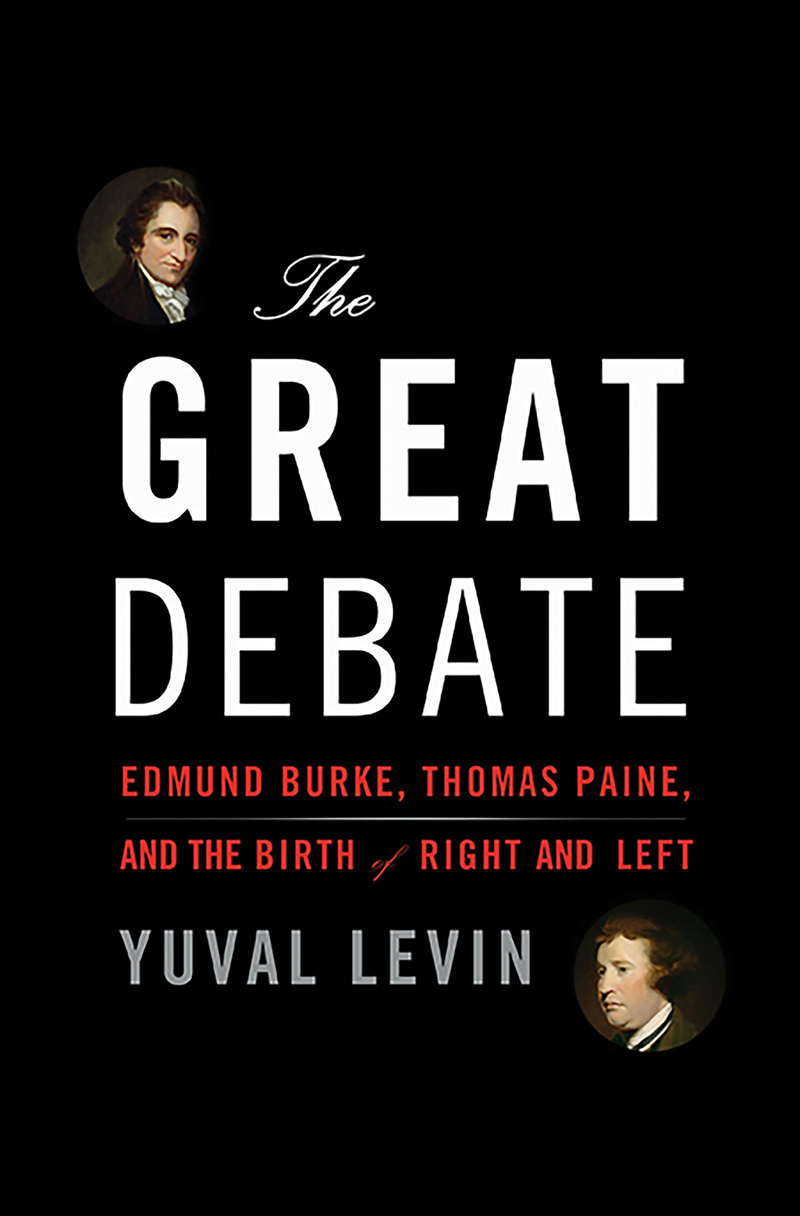
The Great Debate
by Yuval Levin
- nonfiction
- Shelves: history, politics, government, philosophy, biography
- 296 pages
- ISBN: 9780465050970 (Goodreads)
- Format: kindle
- Buy on Amazon
It may be surprising to learn that one of the greatest supporters of the American cause in the Revolution wasn’t an American. In fact, it wasn’t even a Frenchman, allied with the Americans against the British. It was an immigrant Irish Briton named Edmund Burke.
When it comes to governing a people, we tend to focus on ends rather than means. What policy are you pursuing? What are the appropriate rules and laws? But the decade-long disagreement between Burke and Thomas Paine demonstrated that question that should have primacy is about means. How should we go about the business of governing ourselves? What is the right strategy to implement the policies that pursue our goals?
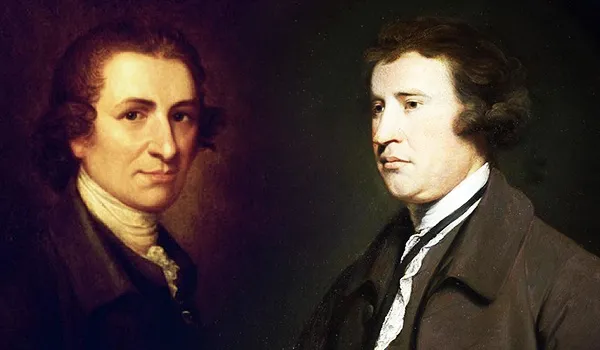
What makes this debate interesting and informative is that Burke and Paine largely agreed on the merits of the American project, its goals and objectives. Which is what makes their profound disagreements so interesting. When revolution started to simmer in France by the mid-1780s, Burke and Paine were aligned on the goals, yet not the tactics. As the revolution wore on and became ever-more violent, the rift between the two widened to a chasm.
In Burke’s view, the prime directive is one of retention of what works first and foremost, an evolutionary, institution-first approach. From his vantage, it was most important to preserve the functions of institutions, even if some of those functions were corrupted and in need of reform. Tradition, by Burke’s lights, held a rich storehouse of difficult-to-replace, hard-won knowledge. The revolutionaries in their zeal to rip apart and rebuild French society root and branch risked throwing the baby out with the bath water.
Paine’s angle favored reasoning in the abstract, focused on principles for their own sake regardless of the reality on the ground. If X is “right,” we should do X. In his view, we could overhaul society from first principles and create an idealistic replacement according to what should be, even if we’d have to break some eggs to get there.
The revolution in France played out much closer to Paine’s worldview. The Orwell line was appropriate: “To make an omelette, we’ve got to break some eggs. But where’s the omelette?” The two exemplified Sowell’s constrained and unconstrained visions better than just about any two contemporaries. And even though Levin (and I) hew very close to a Burkean line of thinking, he makes a strong, defensible case for Paine’s point of view, and gives him plenty of credit for his earlier role in the American project.